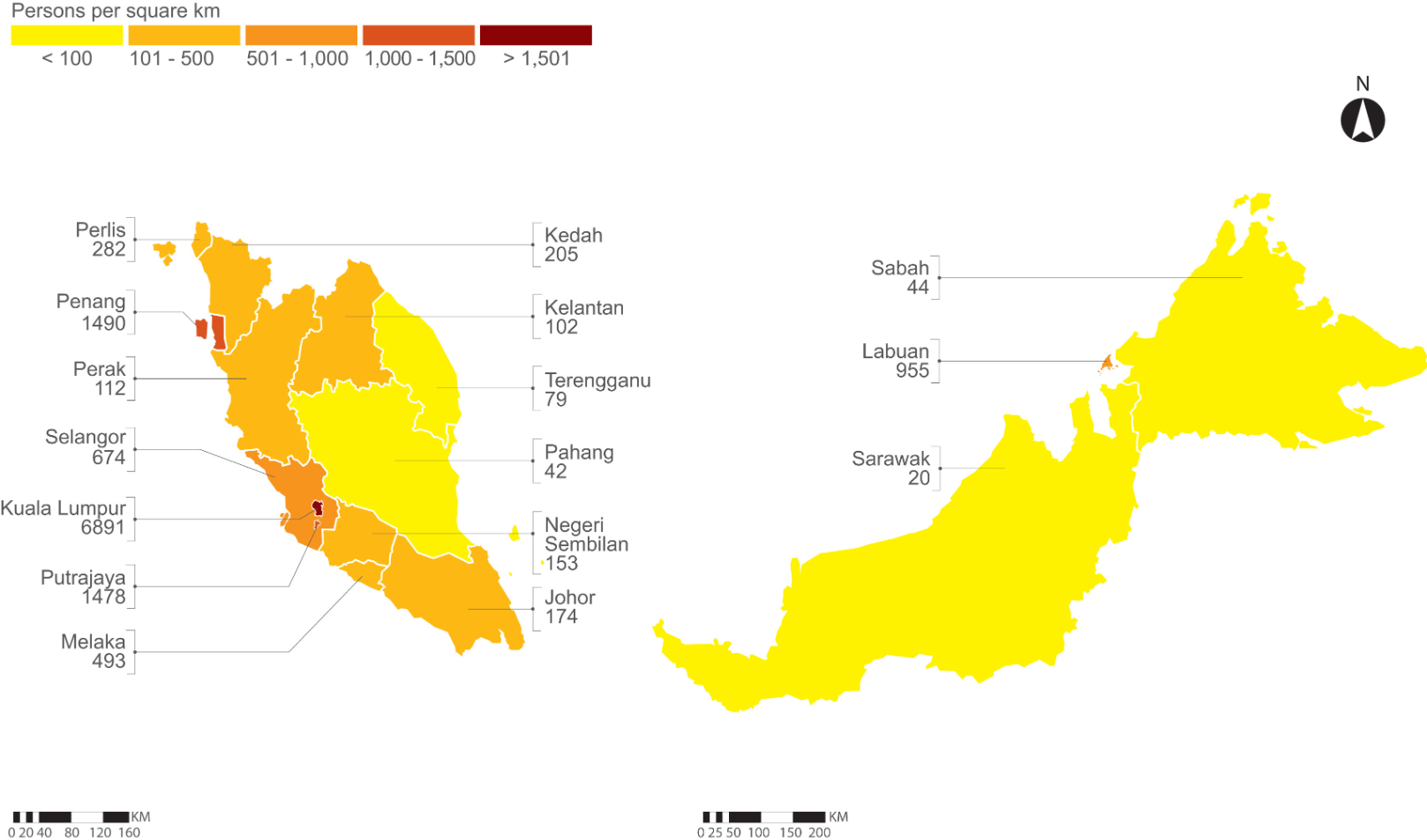
Malaysia is a Southeast Asian country occupying parts of the Malay Peninsula and the island of Borneo. The population of Malaysia (just over 30 million) is multi-ethnic; approximately half the population is ethnically Malay, with large minorities of Chinese, Indians, and indigenous peoples. Approximately 70% of the population is urban (Fig. 1). Life expectancy of Malaysians at birth is 74.9 years.
Health care services in Malaysia are dichotomous between systems of public and private health care. Most patients (∼65%) in Malaysia seek health care services in public facilities. However, the main drawback of public health care is a shortage of doctors and specialists in public hospitals. Public health care in Malaysia is heavily subsidized and offers services at a fraction of the cost of treatment in the private sector. Patients receiving treatment in private facilities, on the other hand, are usually covered by private health care insurance or make out-of-pocket payments. There is currently no universal-access national health care scheme in Malaysia. The total expenditure on health was 4.24% of the gross domestic product in 2017.
The prevalence of smoking is high in Malaysia; nearly 50% of all adult males are smokers, and more than 90% of male lung cancer patients have a significant smoking history.
However, nearly all young female lung cancer patients in Malaysia are never-smokers.
Date of Input: 22/10/2025 | Updated: 13/11/2025 | fatini
MEDIA SHARING